 Skip to content

Canopy Tent
Custom Canopy Tent Printing

Nov
A custom canopy tent is a printed billboard that folds several hundred times a season. Print method, therefore, decides whether the graphic survives that folding. Panel geometry decides whether the logo lands where the artwork promised. The frame, in turn, keeps the cloth taut enough to read from ten metres. Yutang has coated, printed and sewn outdoor fabric since 2005. Custom canopy tent printing at Yutang follows those four decisions in the order a promotional buyer raises them.
Why Does Custom Canopy Tent Printing Start In One Plant?
Yutang prints and builds custom canopy tents on one site in Tongling, Anhui, covering 70,000 square metres. The plant ships to more than 120 countries and regions. It also holds over 80 self-owned patents across tent, chair and rainwear structures. Roof panels, valances, walls and frames leave the same building. That arrangement removes the handoff which normally sits between a printer and a frame supplier. Consequently, one site owns the whole defect.
Which Product Lines Run Under One Roof?
Custom canopy tents sit at the centre of the business. Printed flags, folding chairs and coated cloth sit around them. Raincoat fabric is a small side line here, using the same coating equipment. It covers ponchos, motorcycle rainwear and pet coats. That line earns a mention and nothing more, and in practice the printed canopy carries the volume.
Which Buyers Does The Factory Serve?
Promotional product distributors order custom canopy tents against a brand identity and a fixed deadline. Event rental fleets order stock sizes that must repeat next season. Beverage brands and supermarket chains, meanwhile, order program quantities under one dye lot. Exhibition contractors order custom spans and double-sided walls. Each group asks a different question about print. Each group therefore receives its own artwork checklist.
What Do Twenty Years Add Up To?
Production began in 2005. Two decades of custom canopy tent printing produced repeatable answers on three points. Print method against run length is one. Seam placement across a graphic is another, and colour drift is the third. In short, those answers live in a specification sheet rather than in a sales conversation.
Which Print Method Fits The Order?
Three methods cover almost every order that custom canopy tent printing handles. The choice follows run length, colour count and how the canopy folds. Price per unit is the last question, not the first. Therefore the method decision belongs at the start of a quotation.
How Does Dye Sublimation Bond The Dye?
The printer lays disperse dye on transfer paper. A calender then presses paper and cloth together at roughly 175 °C. The dye turns to gas, enters the polyester fibre and returns to solid inside it. Nothing sits on the surface to crack. The crease that a folding canopy repeats for years crosses dyed fibre rather than printed film. In practice, that bond is why custom canopy tent printing starts with print method. Indeed, the sublimation process is what makes the colour permanent.
When Does Screen Print Win?
Screen print lays a thicker ink film. That film reaches an opacity which sublimation cannot match on dark cloth. A single-colour logo on a black roof is therefore a screen job. Custom canopy tent printing should reserve it for that case alone. The trade is hand. Heavy ink stiffens the fold line. A graphic crossing a repeated crease will craze there after a few hundred cycles.
When Does Digital Printing Fit?
Direct digital print suits short runs, photographic artwork and gradients. Setup carries no screen charge. As a result, twenty canopies with a full-colour image stay economical. Pigment print rests on the fibre, which means the rub and wash rating must be quoted rather than assumed. In practice, that rating is the only number custom canopy tent printing can quote honestly here.
| Method | Best run | Colour range | Fold behaviour | Watch point |
|---|---|---|---|---|
| Dye sublimation | 50–5,000 pcs | Full colour, unlimited shades | Dye inside fibre, cannot peel | Light shades on dark cloth |
| Screen print | 100–10,000 pcs | 1–4 spot colours | Thick ink film can craze on a crease | Ink weight at the fold line |
| Digital direct | 10–200 pcs | Full colour, photo detail | Pigment on surface, needs a top coat | Rub and wash rating |
Why Does Artwork Distort On A Canopy Roof?
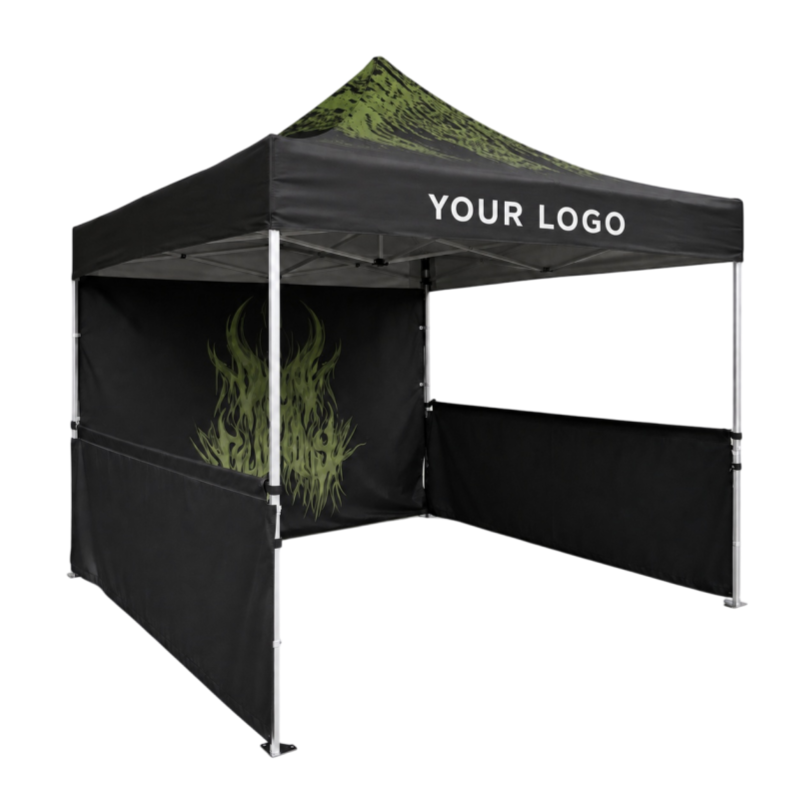
A canopy roof is not a flat sheet. It is four sloped panels meeting at a peak, often with a vent. A flat artwork file has to be cut into that shape. A circle drawn at 100 mm on the file reaches the roof as four arcs. Each pair of arcs meets at a seam. Therefore custom canopy tent printing that starts from the flat file misleads the buyer.
How Is The Roof Panel Built?
The pattern maker converts the flat file into panel pieces, adding seam allowance and bleed outside the trim line. Each piece carries registration marks that the cutter follows. By contrast, a supplier who prints one flat sheet and cuts afterwards loses the alignment between graphic and seam.
Where Does Bleed And Seam Allowance Go?
Bleed runs 15 to 20 mm beyond the trim line. Seam allowance adds 12 to 15 mm on top of that. Artwork placed inside this band gets sewn into the joint. The manufacturer should therefore supply a die line proof with trim, seam and safe area marked.
Where Should The Logo Sit?
Placement follows reading distance. A canopy at a trade stand is read from one to three metres. A canopy at a roadside event is read from ten metres or more. One logo serves both settings only when the size changes. A mark sized for three metres, however, shrinks at ten metres.
Which Zone Reads At Distance?
The valance sits at eye level and carries a horizontal band, which suits a wordmark. Meanwhile, the roof slope faces upward and reads best from a distance. A peak logo is small by geometry and belongs to a brand that already owns recognition. Full-height walls give the largest printable area and the strongest block against wind.
What Changes On A Full Wall?
A wall panel is nearly flat. Artwork therefore reaches it with little distortion, and a photograph becomes practical. Wall panels collect more abrasion from hands and furniture, which favours sublimation over surface print.
What Happens When A Seam Crosses The Graphic?
Every roof needs seams. A seam running through a letterform is, in turn, the most common print complaint in the category. The fix therefore sits in the pattern, and the press never sees the seam.
How Is The Seam Allowance Printed?
The panel piece is printed with a 12 to 15 mm extension of the same graphic. Two halves of a letter then meet across the joint. A supplier who prints only to the trim line leaves a white line through the wordmark. Double printing the allowance removes that defect for a few centimetres of cloth. Custom canopy tent printing therefore treats the omission as avoidable.
Which Artwork Must Avoid The Seam?
In practice, fine type below 25 mm cap height should stay 20 mm clear of any seam. Thin rules and registration-critical marks need the same clearance. A pattern maker who knows the seam map can shift the whole layout. Squeezing a logo into a bad position is the alternative.
Which Frame Holds The Print Tight?
A printed panel reads only when it sits under tension. Slack cloth throws shadows along every crease. Those shadows then break a graphic into stripes at ten metres. Consequently, frame size belongs in the same specification as the print.
Why Does Slack Show White Creases?
A panel cut to the frame’s nominal size leaves spare cloth at the corner pockets. The slack appears after a few weeks of use. The spare cloth folds into a crease. A sublimated graphic survives it, and a surface print cracks along it. Frame size, pocket depth and panel cut therefore belong in one specification.
How Is Frame Size Matched To Panel?
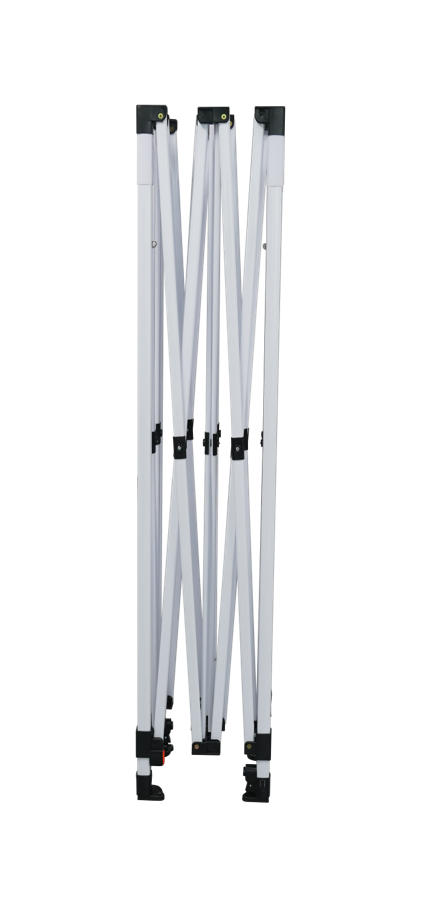
Yutang therefore quotes frame and panel as one item. Custom canopy tent printing treats that match as one specification, and the two are priced together. A 3×3 m canopy pairs a 30×30 mm truss leg with a panel cut to that frame’s diagonal. A 25 mm economy frame takes a different cut. A tube change of two millimetres moves the pocket depth, so the pattern has to be cut again. Mixing the two produces the sag that buyers later blame on fabric. A manufacturer that sells the tube and the panel apart hands that match back to the buyer. The canopy tent pole guide lists the full tube range.
How Is Colour Held Across Reorders?
A custom canopy tent program runs for years, and order two must match order one under the same lighting. Colour control is therefore a documented process at any factory that sells repeat programs. Custom canopy tent printing asks for that record rather than a promise. A promise does not survive a plant audit.
What Is A Strike-Off?
A strike-off is a short print of approved artwork on the production cloth. It is submitted for sign-off before the run starts. It shows the actual dye on the actual substrate. Approval from a monitor proof, by contrast, tells a buyer nothing about either one.
How Is Drift Measured?
A retention sample stays in the file with its dye lot code and date. Reorders are matched against it with a spectrophotometer. A colour difference below 2 reads as the same shade to most eyes. Above all, one dye lot per order plus a retained sample is what makes year three match year one.
Which Tests Prove Custom Canopy Tent Printing?
Print quality is measurable. Every number in custom canopy tent printing comes from a published test method. The figures therefore belong in a quotation a manufacturer sends, not in a brochure.
Which Lab Tests Should A Manufacturer Run?
Colourfastness to light runs against a blue wool scale, and crocking against a rub tester. Water resistance is checked against hydrostatic head and spray rating. Similarly, frame fatigue is checked by repeated erection cycles, and the seam by a tensile pull across the joint. Every report carries a sample ID and a date. Each test runs on a coupon cut from the same roll. Moreover, the coupon number travels with the report custom canopy tent printing asks to see.
Which Fire Codes Apply?
Venues in the United States ask for NFPA 701, and European venues ask for EN 13501-1 class B-s1. Meanwhile, North American camping buyers ask for CPAI-84. Yutang supplies the report for the requested standard with each order. RoHS, REACH, CE, ISO 9001 and GRS documentation follow where a market requires it.
Why Do Folding Chairs Share The Print Floor?
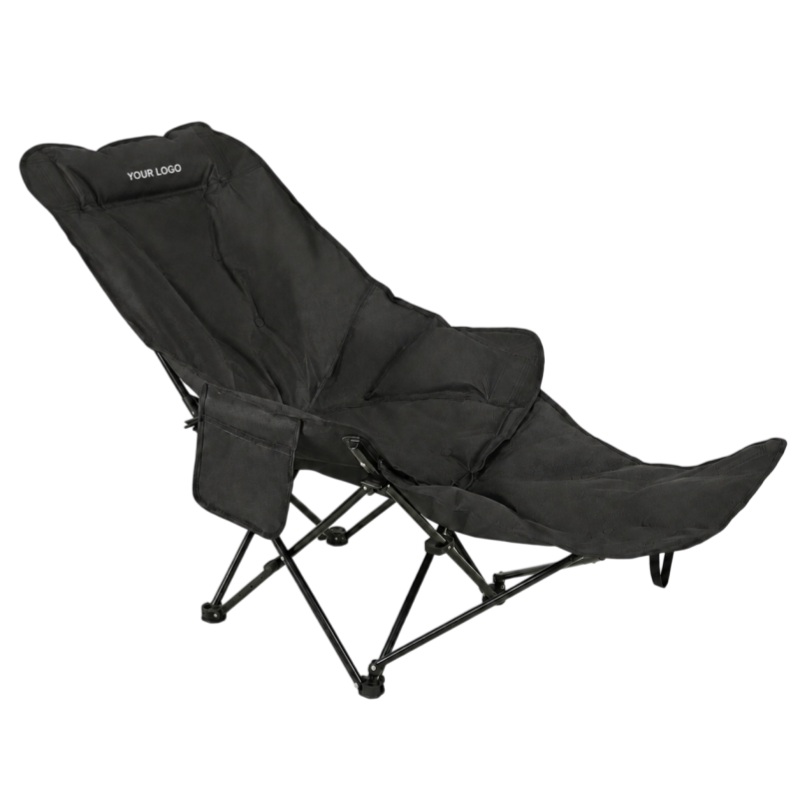
Chairs are the second printed line. A seat back carries a brand in the same way a canopy does. Print, coating and sewing stay in one building. That shortens the loop between a proof and a finished unit. The arrangement, in turn, keeps a matching set in one dye lot.
What Carries The Seat?
A 600D oxford seat carries a PU back coating at 200 to 240 gsm. On a 28 to 32 mm tube with a 1.2 mm wall it holds a 120 to 150 kg rating. That rating belongs to the assembly, and a printed seat panel therefore changes nothing about the load path.
How Is A Chair Graphic Applied?
A seat back takes sublimation on polyester oxford, which survives the flex of a folding action. A logo on a stretch panel distorts as a user sits down. Artwork is therefore sized for the seated state rather than the flat state.
How Is An Order Built Step By Step?
In practice, an order runs through seven gates. Each gate produces a document the buyer keeps. A missing gate shows up as a claim later.
How Is A Sample Approved?
Artwork arrives as a vector or 300 dpi file. The pattern maker returns a die line proof, and a strike-off follows on production cloth. A pre-production sample then confirms frame, panel cut and print together. Moreover, sample cost is credited against the order, which keeps the gate honest for both sides.
What Does OEM Cover Compared With ODM?
Under OEM the buyer owns the drawing and Yutang conforms to it. By contrast, under ODM Yutang owns the structure and the buyer applies a brand. Most custom canopy tent programs sit in ODM with a custom print. The frame geometry is already proven, and only the graphic changes. The customization page sets out both routes.
Which Numbers Decide The Quote?
Five variables drive the price, and custom canopy tent printing that skips one quotes an estimate. Each variable moves the figure in a different direction.
| Variable | Range | Effect on price |
|---|---|---|
| Size | 2×2, 3×3, 3×4.5, 4×4 m and custom spans | Cloth area and frame weight |
| Print method | Sublimation, screen, digital | Setup cost against unit cost |
| Colour count | 1 spot to full process | Screens, passes, drying time |
| Quantity | 50 to 5,000 pcs | Setup spread and material buying |
| Frame | 25 mm economy to 40 mm heavy truss | Tube grade, wall, hardware |
Production runs three to four weeks after sample approval. Carton size follows the folded frame. A box that misses the pallet pattern adds freight to every unit. The minimum order starts at 100 pieces for a standard size. Every unit ships with its frame, spare buttons and a packing list. Therefore the quotation and the packing list arrive together.
How Should A Buyer Compare Suppliers?
Three quotations on the same size can hide three different products. The line items below therefore expose the gap before an order is placed. Custom canopy tent printing lists them in the order a buyer should ask. Each row pairs a weak answer with the document that settles it.
| Line item | Weak answer | Durable answer | What it costs later |
|---|---|---|---|
| Base cloth | “600D” | 600D with coating weight in gsm | A thin coating fails in season two |
| “Full colour print” | Method named, strike-off provided | Surface print cracks at the fold | |
| Seam | Not mentioned | Allowance printed, seam map shown | A white line through the logo |
| Frame | “Steel frame” | Tube diameter, wall and grade | The leg dents at the button hole |
| Colour control | “Same as sample” | Dye lot code and retained sample | The reorder arrives a shade off |
| Test report | “Certified” | Standard named, date, sample ID | The report covers another cloth |
The same discipline applies to the outdoor folding chairs that ship beside a tent order. The tent flag material guide carries the substrate side of the same argument. Both links belong in the same buying file.
Why Choose Yutang For Long-Term Supply?
A printed canopy is a repeat purchase. The value of a supplier shows up in order two rather than order one. Yutang prints, coats, bends tube and sews on one site. That is the arrangement custom canopy tent printing recommends. The company holds the certifications a brand program asks for. It also keeps a documented record of every print run. The plant covers 70,000 square metres and ships to more than 120 countries and regions. ISO 9001, RoHS, CE and BSCI status sit alongside GRS and REACH documentation. Raincoat fabric plays a small side role. The printed custom canopy tent is the core of the business. The about page lists the full production scope.
What Does Custom Canopy Tent Printing Prove?
In short, custom canopy tent printing reduces an order to four decisions. Print method, panel geometry, seam placement and frame match each carry a document. Each one is documented, each one is testable, and each one costs little when handled before the run. Ask for a die line proof, a strike-off, a dye lot code and a named test standard. A buyer who holds those four documents receives a well-controlled canopy. It reads the same in year three as it did on delivery day. Those four documents also let a buyer hold any supplier to the same standard. The FAQ page answers the commercial questions that follow. The contact page opens a specification file for a new program.

 Canopy Tent Flags