 Skip to content

Canopy Tent
Canopy Tent Pole Guide

Oct
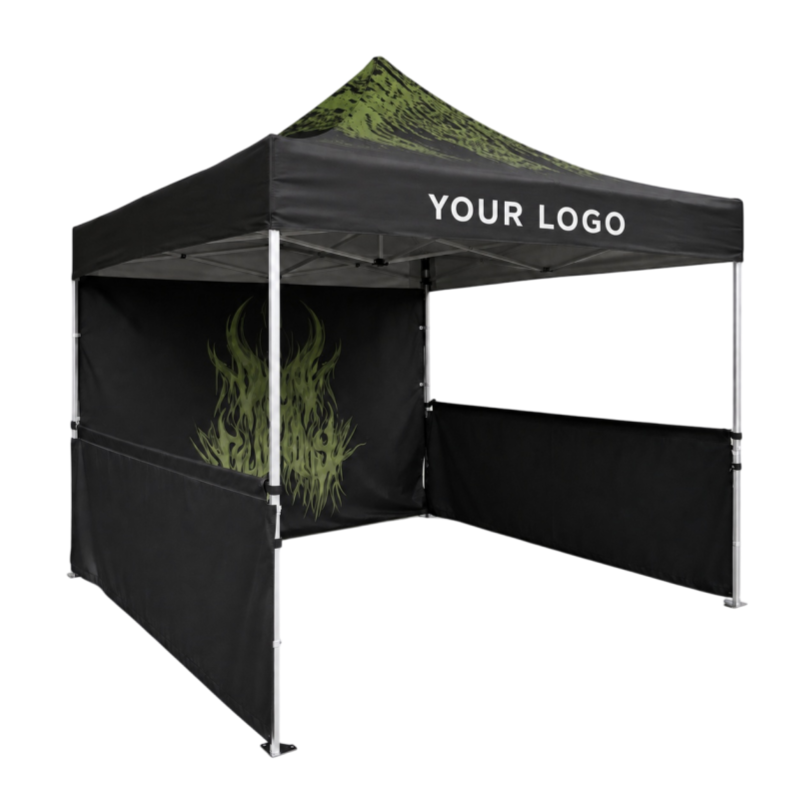
An canopy tent almost never fails through its roof fabric. It fails where a thin tube meets a nylon corner and takes a gust at the wrong angle. Steel grade, wall thickness and the zinc layer decide whether a frame survives a season of weekend markets or two hundred load-ins at a trade show. This canopy tent pole guide compares the tube options by the loads and the weather they actually meet. The questions below follow the order a first-time buyer meets them, from grade to joint to the size printed on the carton.
What Materials Make Up a Canopy Tent Frame?
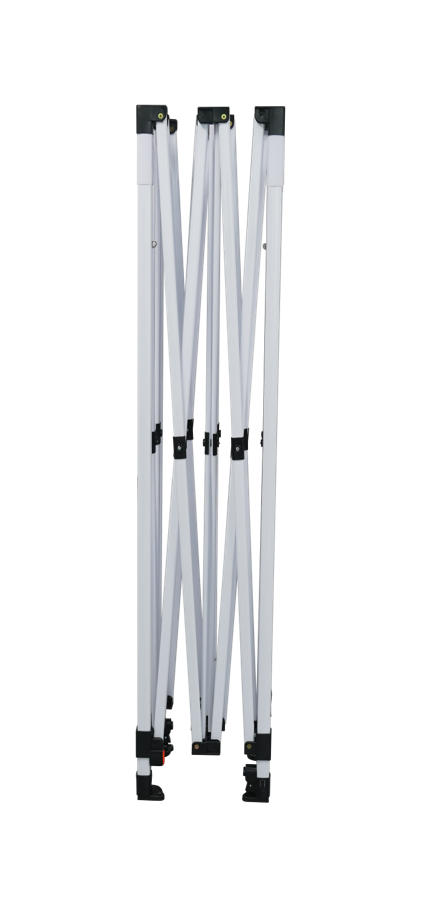
A frame is a set of legs, a roof truss and a handful of joints. The canopy is a separate item in most quotes, and the two are specified apart. Four families cover the market: steel tube, aluminum tube, fiberglass rod and a hybrid that pairs steel legs with aluminum or fiberglass roof ribs.
Steel carries the volume because it is stiff, weldable and cheap per kilogram. Aluminum costs 30 to 40 percent more at the same stiffness and saves weight instead. Fiberglass suits pop-up domes that fold into a circle, not the square 3 by 3 m frame most brands print.
Practically, the frame accounts for roughly half the factory cost and nearly all the warranty risk. A torn canopy is visible and easy to replace. A leg that folds at a market is a liability claim, and no printer wants that call on a Saturday morning.
Which Steel Grade Suits a Canopy Tent Pole?
First, Q235 is the grade behind most 3 by 3 m frames sold today. It welds easily, holds a powder coat and costs little more than Q195 at the same wall thickness. Q195 appears in light promotional tents where the tube is thin and price is the whole argument.
Q345 then earns its place on wider spans. A 3 by 6 m frame at 40 by 40 mm needs the extra yield strength to resist sagging at mid-span when a sidewall pulls on the roof. In practice, most factories quote Q235 up to 3 by 4.5 m and Q345 above it.
Finally, stainless deserves a mention for coastal hire and food stalls. Grade 201 rusts in salt air within two seasons, so grade 304 is the honest choice for a beach operation. Both cost three to four times Q235, which keeps them a niche rather than a default.
What Do the Diameter Numbers on a Tent Pole Mean?
Specifically, a label such as 25 by 25 by 1.0 mm describes a square tube with a 25 mm outside dimension and a 1.0 mm wall. The wall is a separate number, and skipping it is the most common buying error in the category.
Two frames can both read 30 by 30 and differ by 30 percent in weight, because one uses a 0.9 mm wall and the other a 1.2 mm wall. Therefore a quote that names only the outside dimension tells a buyer almost nothing about what will arrive.
Likewise, round tube is quoted the same way, as 25 by 1.0 mm or 32 by 1.2 mm. Pop-up domes often pair 25 mm round legs with fiberglass ribs, since the round profile folds flat without a corner joint. This canopy tent pole guide treats square and round separately for that reason.
How Is a Tent Pole Tube Manufactured?
Most tent tube begins as ERW tube, electrically welded from steel strip and then drawn to size. The weld seam runs the full length, and its position decides where a leg fails first. A seam on the inner corner of a square tube sits away from the bracket load, while a seam on the outer face sits exactly where bending stress peaks.
Cold drawing after welding tightens the wall tolerance and smooths the surface for coating. A cold-drawn tube holds plus or minus 0.05 mm on the wall, and a hot-rolled tube can drift 0.15 mm across a single length. That difference shows up as a leg that dents on one side only.
Similarly, straightness is quoted as millimeters of bow per meter. Good tube bows under 1 mm across a meter. Cheap tube arrives with a visible curve, which becomes a wobbling leg and a canopy that never sits square on its frame.
Above all, examine the cut end before you approve a sample. A bright section with even wall thickness and a centred seam indicates a controlled mill. A burred end with a thin grey seam line indicates tube bought purely on price.
How Thick Should a Tent Pole Wall Be?
Wall thickness runs from 0.6 mm on promotional stock to 1.5 mm on rental frames. Each step changes what the tent can survive.
A 0.6 mm wall dents under thumb pressure at the button hole and folds at the next serious gust. A 0.8 mm wall is the practical floor for a 2 by 2 m or 3 by 3 m tent used indoors and moved by hand. A 1.0 mm wall is the commercial standard for weekly outdoor use, and a 1.2 mm wall belongs on anything rented out or built wider than 4.5 m. A 1.5 mm wall suits the 4 by 8 m frames that carry sidewalls and a printed roof.
Notably, stiffness rises with the cube of the tube depth and only linearly with the wall. A 40 by 40 by 1.0 mm tube therefore beats a 30 by 30 by 1.2 mm tube in bending, even though it uses less steel per meter. Buyers who compare wall thickness alone miss that trade.
Measure before you accept a shipment. Calipers at three points along each leg will show a tolerance of plus or minus 0.05 mm on a good tube, and a 0.15 mm shortfall on a bad one. The button hole area is always the thinnest section, so check it first.
Square or Round Tube: Which Is Stronger?
Square tube resists bending in two directions and gives a welder a flat face for a corner bracket. That combination makes it the default for commercial frames, where legs meet a roof truss at 90 degrees, and it is why this canopy tent pole guide starts with square tube.
Conversely, round tube wins on torsion, which matters on a dome or a curved roof rib. It also carries no sharp edge for a canopy sleeve to chafe against, so the fabric lasts longer at the corner. A round leg cannot be clamped square to a bracket without a welded plate, and that extra step shows up in the price.
Overall, for a printed 3 by 3 m market tent, square 30 by 30 mm is the sane choice. For a pop-up that must fold into a wheeled bag, round 25 mm legs with fiberglass ribs pack smaller and weigh less.
A telescoping leg needs 0.2 to 0.3 mm of clearance between the inner and outer tube. Less than that and the leg jams when the frame racks under wind, while more lets the leg wobble at every height setting. Therefore that fit is a manufacturing tolerance rather than a design preference, and it explains why two frames with identical dimensions feel so different in the hand.
Which Galvanizing Option Stops Rust Longest?
Only salt spray hours are worth comparing between suppliers. A frame described as galvanized may carry 15 g/m² of zinc or 300 g/m², and the two behave like different products. Ask for the test report, not the adjective.
Cut ends and weld seams carry no zinc at all, which is where rust starts on an otherwise good frame. A zinc-rich touch-up pen at assembly solves most of it. Stainless spring buttons solve the rest, since the button is the part that scratches the bore every time the leg adjusts.
Powder Coating or Bare Galvanized Tube?
Powder coating adds color, a smooth surface and a further barrier against moisture. A polyester powder at 60 to 80 microns holds gloss outdoors for years and accepts a brand color matched to a RAL or Pantone reference.
In contrast, bare galvanized tube costs less and looks industrial. It suits rental stock that will be repainted or replaced, and it shows scratches as grey patches rather than white chips. For a branded tent on a showroom floor, the coating pays for itself in the first season.
The best specification is duplex: galvanized tube, then powder over it. The zinc handles a scratch that reaches the steel, and the powder handles sun and handling. This canopy tent pole guide recommends duplex for any frame expected to last beyond three seasons.
Which Joint Materials Hold a Frame Together?
Nylon PA6 is the cheapest joint and cracks below minus 10 °C. Glass-filled nylon, usually PA6 with 30 percent glass fiber, holds shape under load and survives a cold snap. Die-cast aluminum corners cost more and outlast both, which is why rental frames use them.
The locking method matters as much as the polymer. A spring button is fast but enlarges its hole over time. A pull pin through a steel sleeve holds its diameter. A bolt and wing nut is slow to set up and never slips, so it suits a frame that stays up for a month.
Sliding leg collars wear oval and let the leg wobble. Two dollars of spare collars and buttons per tent prevent a whole frame from being scrapped, and few buyers think to order them.
How Much Wind Can a Steel Frame Take?
A 3 by 3 m canopy presents about 9 square meters of sail. At 10 m/s, roughly 22 mph, that surface sees around 55 kg of uplift before any drag allowance, and a realistic coefficient pushes the figure toward 70 kg.
Anchoring decides whether the frame survives it. Four leg weights of 10 to 15 kg each, or four stakes driven to full depth, hold a 3 by 3 m tent in that breeze. Guy ropes at 45 degrees add far more resistance than extra weight alone, because they stop the frame racking sideways.
Still, no pop-up tent belongs outside overnight in an unforecast storm. A vented roof releases pressure that would otherwise lift the canopy off its truss, and a closed roof turns the same gust into a parachute. Wind ratings quoted without an anchoring condition mean nothing, so ask what the number assumes.
Which Canopy Fabric Pairs With a Steel Pole?
Importantly, flame retardancy is a separate specification from weight. NFPA 701 covers the American market, CPAI-84 covers camping tents, and EN 13501-1 class B-s1 covers the European Union. A fabric certificate should name the standard and the test date, since treatments wash out and expire.
A heavy canopy on a thin frame sags at mid-span, pools water and then fails at the seam. Match the fabric to the tube rather than upgrading one and leaving the other.
How Does Logo Customization Work on a Canopy Tent?
Typically, print on the valance reads from a distance and costs least, because the panel is small and flat. A full sublimated roof gives one unbroken brand image and hides stains, and it costs two to three times a screen printed valance at volume.
The frame itself can carry a mark as well. Laser engraving on a stainless plate riveted to a leg survives years of handling, and a powder coat matched to a Pantone reference turns the structure into brand furniture. A printed pole sleeve and a printed carry bag cost little and finish the set.
Artwork for custom tent printing should arrive as vector files with fonts outlined, plus Pantone references and a 10 mm bleed. Ask for a strike-off before the run. Screen color shifts on a coated fabric, and a strike-off is the only honest way to see it before fifty tents are printed.
Canopy Tent Pole Guide: Which Size Fits My Event?
A 3 by 3 m tent covers one market stall with two people behind a table, and it is the size most brands print first, with every frame span listed in the tent size guide. It sets up in about three minutes with two people and fits in a car boot at 8 to 10 kg for the frame.
A 3 by 4.5 m tent suits a food stall or a product demo that needs a table plus standing room. It needs a second pair of hands to raise and a van rather than a hatchback.
A 3 by 6 m tent suits a trade stand with a back wall and a counter, and a 4 by 8 m frame suits a rental fleet or a showroom annex. Above 4.5 m of span, specify cross bracing and Q345 tube, because a printed roof catches wind across its full width.
How Much Weight Must a Pole Carry?
First, the canopy is the lightest load. A 600D roof for a 3 by 3 m tent weighs 3.5 to 4.5 kg dry, and a sidewall adds 1.2 to 2 kg each. Four sidewalls turn a light frame into a sail with a 12 kg hanging load.
However, water and snow are the loads that break frames. A flat roof sheds rain poorly, and a sagging panel concentrates a pool over one truss. Five centimeters of wet snow on a 9 square meter roof adds roughly 45 kg, which is more than most 1.0 mm frames are built to hold.
Deflection tells you what the numbers hide. A roof that sags more than 15 mm at mid-span under its own canopy is under-built for that span, and it will pool water in the first heavy rain.
How Do I Choose the Right Canopy Tent for Me?
Four questions settle the rest. Where will it stand, and for how many days at a time? Who will carry and raise it, and does that person work alone? How many seasons must the frame survive before it is written off? What must the logo do at the distance a buyer actually stands?
As a result, a tent that answers all four honestly costs more than the cheapest quote and less than two replacements. That arithmetic is the whole argument for buying the frame once.
How Long Does a Steel Tent Frame Last?
A duplex frame with aluminum corners holds five to eight years of weekly use. A pre-galvanized frame without powder holds three to five. A thin powder-coated tube with no zinc underneath rusts at the button holes within two seasons. That distinction matters, because those are three different products rather than three grades of the same one.
Coastal air cuts every figure by about 40 percent. Salt settles in the leg bores and attacks the cut ends, which is why a beach operation should rinse and dry the frame after every event.
Storage decides more than most buyers expect. A frame packed wet grows rust from the inside, where no coating reaches, and the damage shows only when a leg fails. Dry it fully, store it off concrete and touch up chips with enamel before they bloom.
What Should I Confirm Before Ordering?
Ask for the tube grade in writing, not just the dimension. A mill certificate for Q235 or Q345 costs the factory nothing and settles most disputes before they start.
Ask for a salt spray report and a flame certificate with dates. Ask for the wall thickness tolerance and measure a sample with calipers. Ask what the wind figure assumes for anchoring, and ask whether spares ship with the order.
Order one printed sample and raise it yourself. A frame that takes four minutes and two people to raise, or a valance that reads badly in daylight, shows up in that test and nowhere else. A sample that passes predicts a production run that holds, and that check closes this canopy tent pole guide.

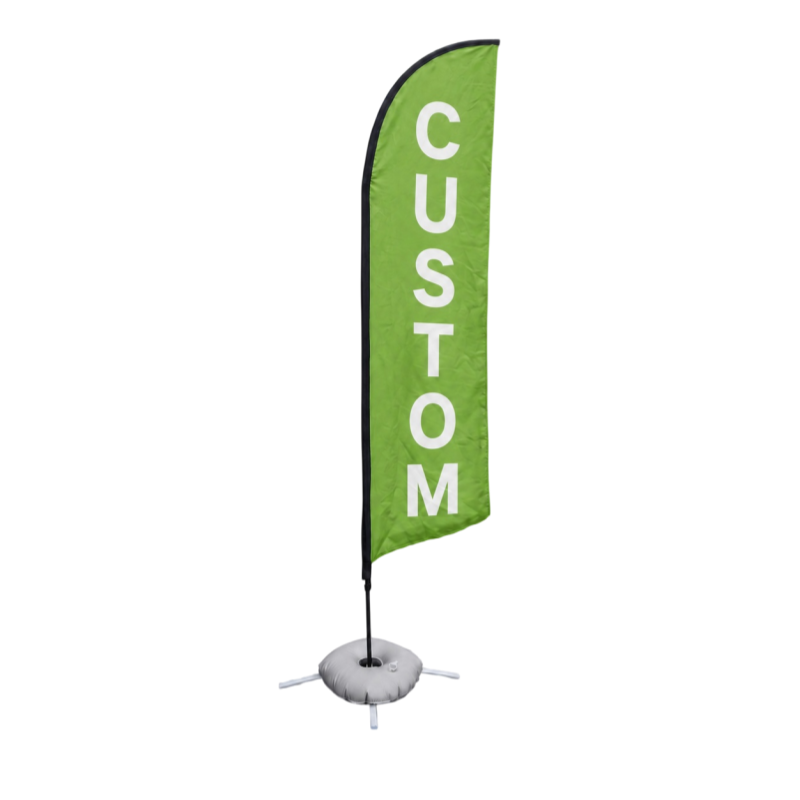
 Canopy Tent Flags