 Skip to content
Uncategorized
How to Choose Advertising Tents Banners

Jul
How to Choose Advertising Tents Banners
Why does vinyl dominate outdoor advertising?
Vinyl offers unmatched durability. It resists rain, sun, and extreme temperatures. This material handles -40°F to 194°F without cracking. Heavy-duty 18 oz. vinyl provides 617 lb. tensile strength. It also resists tearing up to 66 lb.. Fire-retardant NFPA-701 certification makes it safe for public events. For tents, PVC-coated polyester combines vinyl’s waterproofing with lightweight portability. Scrim vinyl adds a woven polyester mesh. This reinforcement prevents ripping in windy conditions. Choose 15–18 oz. for long-term outdoor use. Lighter 13 oz. works indoors or for short campaigns.
Polyester – Indoor Elegance
When should you pick polyester fabric over vinyl?
Polyester delivers premium visual quality. It produces sharp, vibrant prints without glare. Dye-sublimation printing bonds color deep into fibers. This ensures photorealistic gradients and fine details. The fabric resists wrinkles and creases. You can fold it for compact storage and easy transport. Polyester tents remain lightweight while holding shape. Unlike nylon, polyester retains color after prolonged sun exposure. It resists stretching and fading remarkably well. Use polyester for trade shows, photo backdrops, and corporate events. Its elegant finish elevates any indoor branding effort. For temporary displays, polyester offers cost-effective sophistication.
Mesh – Wind Resistance
How to Choose Advertising Tents Banners
What role does mesh play in gusty locations?
Mesh banners reduce wind pressure significantly. Micro-perforations let air flow through the fabric. This prevents flapping and structural damage. High-performance mesh uses 300–500g/m² reinforced polyester. PVC-coated versions offer tensile strength above 200N/2.5cm. They withstand strong gusts without tearing. Print clarity remains acceptable despite slight color muting. Use 12×12 holes per inch for optimal balance. This density allows wind permeability while preserving readable graphics. Mesh works best for parks, sports venues, and building exteriors. Tent side panels with mesh reduce wind load too. They maintain brand visibility from multiple angles. Choose mesh when solid materials would fail in stormy conditions.
Lamination vs. Knife-Coating
How to Choose Advertising Tents Banners
How do laminated and knife-coated banners differ?
Laminated banners bond PVC film onto polyester scrim. Heat and pressure create a quick, economical product. However, the bond proves less durable. These lightweight banners suit short-term indoor use. Semi-coated materials reduce PVC coverage to lower costs. They balance weight and print surface quality. Knife-coated banners represent the premium tier. Molten PVC applies directly onto woven scrim. A precision knife spreads the coating evenly. This embeds PVC deep into the fabric. The result resists tearing, fraying, and weather damage. Knife-coated materials offer superior dimensional stability. They also provide a smoother print surface. Invest in knife-coated for high-tension setups and long-term installations.
Custom Logo Printing
What customization methods work best for your brand?
Dye-sublimation remains the top choice for polyester. Heat transfers dye permanently into fibers. This produces vibrant, crack-proof images. It excels at complex gradients and photographic details. Digital printing works well for vinyl banners. UV-cured inks resist fading and scratching. Most suppliers offer single-sided printing as standard. Double-sided options add visibility from all directions. Corner banners wrap around tent legs for cohesive displays. Valance banners attach to the canopy’s front edge. They place your logo at eye level. Many manufacturers provide free design templates. They also offer online tools for artwork upload. Heat transfer suits small quantities economically. Screen printing becomes cheaper for large production runs.
Sizing Your Banner
How do you determine the perfect dimensions for your tent?
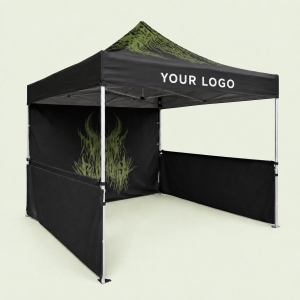
Start with your tent size and booth layout. For a 10×10 canopy, valance banners measure 9 ft wide by 1 ft tall. This fits the front edge perfectly. Back-wall banners offer maximum impact. Choose 96×96 inches for full coverage. This creates a professional backdrop. For table displays, opt for 60×96 or 72×96 inches. These sizes provide substantial branding above products. Side banners come in half-wall (8–9 ft wide × 3–4 ft tall) or full-wall (8–9 ft wide × 7–8 ft tall). Apply the 1-inch-per-10-feet rule for text sizing. Viewers 30–40 feet away need letters 6–12 inches tall. Always consider your budget and branding goals. Larger banners cost more but deliver greater visibility. Measure your available space carefully before ordering.
Final Selection Tips
What practical factors should guide your final choice?
Evaluate your primary environment first. Outdoor use demands vinyl or mesh. Indoor displays benefit from polyester’s aesthetics. Next, estimate usage duration. Short campaigns (under one year) suit laminated materials. Long installations (over three years) need knife-coated vinyl. Portability matters too. Fabric banners fold compactly; heavy vinyl needs careful rolling. Consider printing complexity. Polyester handles photographic designs best. Vinyl works well for solid colors and bold text. Budget constraints influence decisions. Vinyl offers the best durability per dollar outdoors. Polyester provides premium value indoors. Finally, inspect finishing details. Reinforced edges, grommets, and pole pockets ease installation. They also extend product lifespan. Balance these practical considerations against your advertising objectives. This approach ensures you choose materials that deliver visual impact and lasting value.

 Canopy Tent Flags