 Skip to content

Outdoor Tent
Outdoor Tent OEM Factory

Apr
1. Materials Used by an Outdoor Tent OEM Factory
What materials go into your tents?
We weave our own Oxford cloth and technical fabrics. For small tents, lightweight 150D or 210D Oxford with PU coating offers easy portability. For large tents, we use 300D to 600D Oxford with thicker PVC backing, providing superior tear strength and weather resistance. All fabrics receive UV treatment and waterproof ratings from 1500mm to 5000mm hydrostatic pressure. Additionally, we offer ripstop polyester for ultra-light backpacking models, which prevents tear propagation without adding significant weight. For heavy-duty family tents, we reinforce high-wear areas with double-layer fabric patches and bar-tacked stitching.
2. Small vs. Large Tents from an OEM Factory
How do I choose between small and large tents?
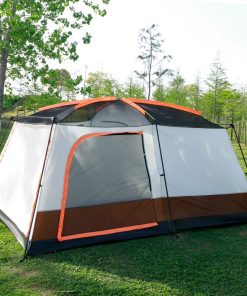
Small tents (2‑4 person) suit backpacking, motorcycle camping, or short trips. They use lighter fabrics and compact pole systems, setting up quickly. Large tents (6‑10+ person) function as family cabins or base camps. They feature separate rooms, higher ceilings, and heavier-duty frames. Our large models often include awnings and multiple zippered entrances for extended stays. For groups needing even more space, we offer cabin-style tents with vertical walls, maximizing interior headroom and making them ideal for long-term camping or event support.
3. Capacity Options at Our Outdoor Tent OEM Factory
What capacity options are available?
Small tents typically sleep 2, 3, or 4 people. Common configurations include:
-
2-person dome tents – lightweight, ideal for backpacking
-
3-person tunnel tents – extra vestibule space for gear storage
-
4-person family dome – spacious enough for small families
Large tents accommodate 6, 8, or 10+ people. Popular options include:
-
6-person cabin tent – one main room with center height over 180cm
-
8-person multi-room tent – divided into two or three separate sleeping areas
-
10-person family tent – includes a screened porch or awning for outdoor living
For group camping, we offer modular designs that connect multiple units, allowing you to expand capacity as needed. Each tent includes clear capacity labeling based on standard sleeping pad dimensions.
4. Fabric Customization in an OEM Factory Setting
Can I customize tent fabrics and colors?
Yes. Because we operate as an Outdoor Tent OEM Factory, we produce fabric in‑house, offering custom colors, finishes (matte or glossy), and specialized coatings such as silver coating for heat reflection or blackout layers for improved sleep quality. Logos can be printed on the tent body, rainfly, or storage bags using screen printing or heat transfer. For larger orders, we can also emboss custom patterns into the fabric surface, adding a distinctive texture that reinforces brand identity.
5. Sidewall and Panel Customization Options
What sidewall and panel customization is possible?
For large tents, sidewalls can be modified with additional windows, ventilation panels, or zippered doors. Mesh panels for insect protection are available in various densities—fine mesh for no-see-um protection in tropical regions, or standard mesh for general airflow. We also offer custom pole colors, reinforced stitching at stress points, and optional PVC floors for heavy‑duty use. For winter camping applications, we can add snow skirts around the base to seal out drafts and prevent snow from blowing underneath.
6. Selecting the Right Tent Size for Your Group
How do I ensure the tent fits my group size?
Consider both sleeping capacity and living space. A 4‑person small tent works for two adults with gear. For families, an 8‑person large tent provides room for sleeping and changing. We recommend sizing up if you plan to use cots or bring extra equipment. For extended trips, consider tents with awnings or vestibules—these add protected storage space without increasing the sleeping area footprint. Additionally, check peak height specifications; taller individuals will appreciate tents with center heights above 170cm.
7. Certifications from a Professional OEM Factory
What certifications do your tents carry?
Our tents comply with CPAI‑84 flame retardancy standards, a critical safety requirement for camping equipment sold in North America. Fabrics are tested for tear strength (ASTM D1424), UV resistance (AATCC 16), and waterproof performance (AATCC 127). Upon request, we provide OEKO‑TEX Standard 100 certification for fabric safety, ensuring no harmful substances are present. For tents intended for commercial rental or institutional use, we can supply additional documentation such as material safety data sheets and durability test reports.
8. Production Timeline for Custom Tent Orders
How long does custom tent production take?
Custom orders—including unique fabric colors, prints, and modified dimensions—require 35 to 50 days after sample approval. Our in‑house material production allows shorter lead times compared to factories relying on external suppliers. For urgent projects, we offer expedited sampling within 10 to 12 days. However, for large-volume orders (500 units or more), we recommend placing orders 60 days in advance to secure production capacity and raw material allocation.
9. Sample Orders Before Bulk Production
Can I order a sample before bulk production?
Yes. Pre‑production samples are available for design verification. We provide digital mockups and physical samples to confirm fabric, print placement, and dimensions before mass production begins. Sample costs are typically credited toward the final order, making it a risk-free way to validate quality. For complex custom designs, we also offer a prototype phase where we can test structural integrity and assembly ease before moving to full production.
10. How to Choose the Right Tent for Your Market
How do I select the right tent for my market?
Define the primary use: backpacking tents prioritize low weight and compact pack size; family camping tents emphasize space and durability. Consider your target climate—breathable mesh panels suit warm regions, while full‑coverage rainflies with taped seams are essential for rainy environments. For markets with strong seasons, we recommend lighter colors for hot climates to reflect sunlight, and darker, heat‑absorbing colors for cooler regions. Additionally, evaluate the typical group size in your market: smaller tents sell well in regions with solo or couple-oriented outdoor culture, while larger tents perform better in family-centric markets.
By partnering with an Outdoor Tent OEM Factory, you gain consistent quality and full customization. Share your target capacity, application, and branding requirements—we will help you create tents that deliver comfort, durability, and a strong market presence.
