 Skip to content
Canopy Tent
Canopy Tents Material Comparisons
Apr
Polyester is thin, light, and highly elastic. It resists wear and corrosion, making it suitable for occasional use. Entry‑level canopies often use 150D polyester. Commercial‑grade units, in contrast, start at 500D. The “D” stands for denier, which measures yarn weight per 9,000 meters. Consequently, higher denier means thicker, tear‑resistant fabric.
Oxford cloth uses a basket‑weave pattern, adding thickness and weight over plain polyester. Many large tents and heavy‑duty covers employ this material. Standard Oxford fabric alone is not fully waterproof. Therefore, manufacturers apply a PU (polyurethane) coating to seal the weave and improve water resistance. Unlike PVC coating, PU remains flexible even in winter temperatures.
Premium PVC fabric (e.g., 350gsm PVC) offers top‑tier waterproofing and UV resistance. Independent tests show PVC retains vibrant color after 12 months outdoors. Meanwhile, standard 600D Oxford polyester fades noticeably within the same period. The trade‑off involves weight and bulk. For this reason, PVC is heavier and less flexible, making transport more difficult.
For most event organizers, 600D polyester with PU coating strikes the ideal balance. It handles weekly use, allows one‑person setup, and accepts dye‑sublimation printing better than PVC. If you need absolute waterproofing for multi‑day festivals, upgrade to 350gsm PVC.
Custom Logo Printing Methods
Canopy Tents Material Comparisons
Your brand visibility depends on crisp, colorful logos that survive rain and folding. Two professional printing methods exist: dye‑sublimation and UV printing.
Dye‑sublimation prints a reverse design onto transfer paper using disperse dye inks. When heat and pressure are applied, solid ink turns into gas that permeates the fabric fibers. As a result, this creates a permanent, vibrant print that never cracks or peels. Full‑coverage canopy tops benefit most from this method. Furthermore, it works best on polyester fabrics.
UV printing uses UV‑curable inks exposed to ultraviolet light after application. This creates a durable printing layer on the fabric surface. Color stability and fast turnaround make it suitable for large commercial events. However, the printed layer sits on top of the fabric rather than bonding into fibers. Consequently, heavy folding may cause faster wear.
For OEM event production, dye‑sublimation remains the industry standard. Sponsor logos and event branding stay visible across multiple tournament days. Always request sample prints on your exact fabric. Otherwise, print quality varies significantly between 300D, 600D, and PVC substrates.
Canopy Tent Size Selection
Canopy Tents Material Comparisons
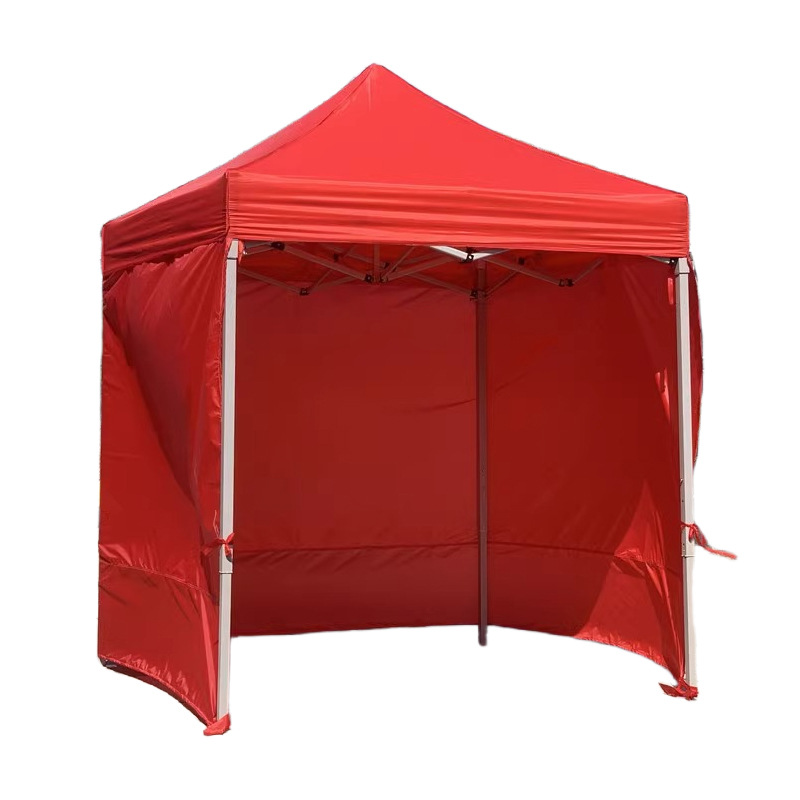
Sizing confuses many buyers. Nevertheless, the most common pop up canopy sizes are 5×5, 8×8, 10×10, 10×15, 10×20, and 20×20 feet. Each size serves a distinct purpose.
A 5×5 foot (1.5×1.5 m) tent works for promotional kiosks, sampling booths, or event check‑in points. It holds about 2‑3 people standing or 1‑2 seated. An 8×8 foot (2.4×2.4 m) model suits compact displays and small vendor booths. Moreover, it is comfortable for 4‑5 people standing.
The 10×10 foot (3×3 m) size is the industry standard for vendor booths, trade shows, and farmers markets. It holds 8‑10 people standing or 4‑6 seated, and fits one 6‑foot table. Therefore, many event organizers require this footprint for standard booth allotments.
A 10×15 foot (3×4.5 m) tent handles larger displays, food vendors with prep space, or event registration areas. It accommodates 12‑15 people standing or 6‑8 seated, and fits two 6‑foot tables. For team bases, food service lines, or large product displays, choose 10×20 feet (3×6 m). It holds 15‑20 people standing or 8‑10 seated, and fits three 6‑foot tables.
The 20×20 foot (6×6 m) size serves marathons, large exhibits, and team sports headquarters. It holds 30‑40 people standing or 24 seated. To choose correctly, count your tables and staff members. Then add 20‑30% for customer movement. Otherwise, a crowded tent discourages visitors. Always check event booth size requirements before ordering.
OEM Event Shelter Advantages
Canopy Tents Material Comparisons
Consumer‑grade options often fail after one season. Our OEM event shelters stand apart in several ways.
Frame material: Many low‑cost canopies use thin steel frames that rust and bend. We use galvanized steel frames with CE certification, offering corrosion resistance and long‑term stability. The 2026 trend shifts toward aluminum frames for their rust‑proof nature. Consequently, our commercial line features aluminum alloy frames that support heavier fabric loads while staying portable.
Fabric thickness: Entry‑level canopies often use 150D or 210D polyester. We start at 500D polyester for standard models. Additionally, we offer 600D PU‑coated Oxford fabric for premium units. For extreme conditions, our 350gsm PVC option provides fully waterproof, UV‑resistant protection with a 2‑year warranty. In comparison, competitors at similar price points frequently downgrade to 300D fabric without proper coating.
Print durability: Generic branded tents use digital printing that fades within months. Our dye‑sublimation process embeds ink into fabric fibers. Therefore, logos remain vibrant through rain, sun, and repeated folding. UV printing is also available for rapid turnaround orders. Furthermore, full‑color printing on both canopy top and sidewalls includes Pantone color matching for brand consistency.
Weather protection: Many tents claim “water‑resistant” but leak through seams. Our fabric features PU coating that seals the weave. It also includes reinforced stitching and heat‑sealed seams on premium models. UV protection is rated UPF 50+, blocking 99% of harmful rays. Fire safety meets CPAI‑84 and NFPA 701 standards, which is mandatory for public events.
Ease of setup: Consumer canopies often require tools and multiple people. Our pop‑up mechanism allows assembly in minutes without tools. Height‑adjustable legs and a folding frame fit into a rolling carry bag. Consequently, one person can set up a 10×10 model in under five minutes after minimal practice.
Sports Event Canopy Criteria
Canopy Tents Material Comparisons
Event production demands shelters that perform under pressure. Follow these five selection criteria.
First, prioritize fabric denier over price. A 600D polyester top costs more upfront but lasts three to five times longer than 150D alternatives. Therefore, calculate cost per event day rather than purchase price. A $200 canopy that fails after 10 events costs $20 per day. In contrast, a $500 commercial canopy that lasts 100 events costs only $5 per day.
Second, verify certifications. Many event venues require CPAI‑84 or NFPA 701 flame‑retardant certification for all temporary structures. Otherwise, a non‑compliant tent can be rejected at check‑in, forcing you to scramble for replacements.
Third, match size to your operation. For a single sponsor booth, 10×10 feet is standard. For a race registration area with multiple volunteers, 10×15 or 10×20 feet provides necessary breathing room. For team hospitality zones, consider multiple 10×10 units or a single 20×20 structure.
Fourth, order spare tops. When you produce thousands of event days, canopy tops wear out before frames. Our OEM service provides replacement tops that fit your existing frames. Consequently, you avoid buying entire new shelters.
Finally, work with an experienced OEM manufacturer. Look for suppliers with a proven track record in event production. Liping Outdoors, for example, has supplied equipment for the 2010 World Cup, 2010 Commonwealth Games, and 2012 Olympic Games. Furthermore, it has worked with GL Events in France and E‑Z UP in the USA. Such experience ensures your canopies meet international safety standards.
