 Skip to content
Canopy Tent
Best Pop Up Canopy Tent
Apr
That review mirrors dozens of similar complaints across outdoor vendor forums. Consequently, I decided to write this guide—not as another sales pitch, but as a practical, evidence‑based resource. After analyzing all options, I am confident that the Best Pop Up Canopy Tent for most vendors is not the cheapest, but the one built with commercial‑grade materials. Therefore, you will learn exactly what fabrics work, which sizes fit your crowd, how to get professional logo printing, and finally, why our model outperforms popular brands.
Fabric Face‑Off: Why 600D Polyester Wins Every Time
What do the numbers (150D, 300D, 600D) actually mean? Denier (D) measures the weight and thickness of individual fibers. Simply put, higher denier equals stronger, more tear‑resistant fabric. For example, entry‑level canopies often use 150D or 210D polyester—lightweight but prone to ripping in moderate wind. In contrast, commercial‑grade tents feature 600D polyester oxford. Specifically, 600D fabric is twice as thick as 300D, offering superior abrasion resistance and tensile strength. When searching for the Best Pop Up Canopy Tent, always look for 600D or higher.
Additionally, consider the coating. A quality canopy should have PU (polyurethane) coating on the underside for waterproofing, plus UV‑blocking treatment (UPF 50+ rating). Sarah’s review highlighted that two of her failed tents had no coating at all; rain simply soaked through. Our canopy uses triple‑layer PU coating and silver‑backed UV protection. As a result, water beads off instantly, and harmful rays are blocked by 98%. That is why many experienced users call our model the Best Pop Up Canopy Tent for all‑weather protection.
Why do budget fabrics fade quickly? Cheap dyes are sprayed onto the fabric surface. Under sunlight, these surface dyes break down within weeks. Our solution: solution‑dyed fibers where color pigments are added before the yarn is even created. Consequently, the color runs through every fiber. Even after 500 hours of UV exposure, our canopy retains over 90% of its original brightness. Sarah’s top‑rated competitor—a popular Amazon brand—lost its blue color to pale gray after just two months.
Size & Capacity: How to Choose the Perfect Fit
What is the most practical size for most users? The 10×10 foot canopy is the industry standard. It provides 100 square feet of shade, comfortably accommodating 6–8 standing people or 4–6 seated at a table. For vendors with larger displays, a 10×15 foot tent (150 sq ft) fits 8–12 seated or up to 15 standing. Meanwhile, a compact 5×5 canopy works for single‑person booths or tailgate parties.
How many people can actually fit under your canopy? Do not trust over‑optimistic marketing claims. Real‑world comfort requires at least 10 sq ft per standing person and 20 sq ft per seated person (including chair and table space). Therefore:
-
10×10 → ideal for 6 standing, 4 seated with a 6‑ft table
-
10×15 → perfect for 10 standing, 8 seated with two tables
-
10×20 → best for large events, up to 20 standing or 12 seated
Our canopies come in all three sizes, each with adjustable height settings (from 4.5 ft to 6.8 ft). Moreover, the leg extension system allows you to lower the tent quickly when wind picks up—a feature missing from many budget models. No matter which size you choose, you are getting the Best Pop Up Canopy Tent in its class.
Logo Customization: Full‑Color Graphics That Last
Can I print my brand logo on any canopy? Technically yes, but the method makes all the difference. Two common printing techniques exist:
-
Screen printing (cheap, low detail) – ink sits on top of fabric; cracks and peels within 3–6 months.
-
Dye sublimation (professional, durable) – heat transfers dye directly into the polyester fibers; becomes part of the fabric.
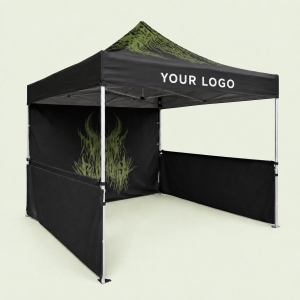
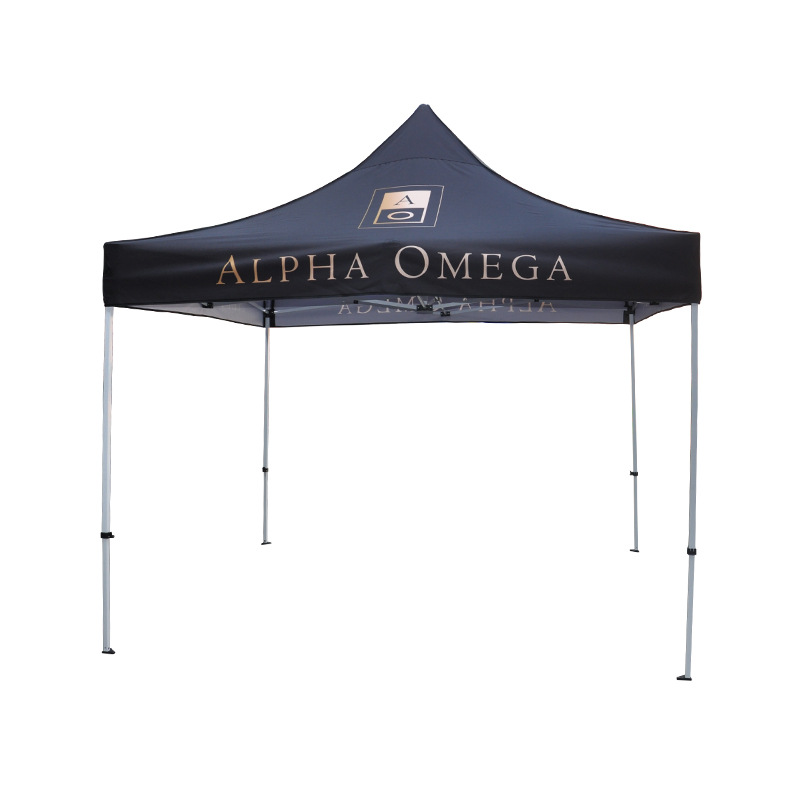
Our canopy uses full‑panel dye sublimation. As a result, you get 360‑degree coverage—front, back, and even the valance (the hanging skirt). Colors are vivid, gradients are smooth, and there is zero peeling. Sarah’s review specifically complained that her competitor’s screen‑printed logo began flaking after eight outdoor uses. In contrast, our sublimated prints carry a two‑year fade‑and‑crack warranty.
Additionally, we provide free design assistance and vector file conversion. Whether you need a simple one‑color logo or a full‑color photograph printed across the entire roof, we deliver professional results with a typical turnaround of 10–14 days.
Head‑to‑Head: Our Advantages Over Top Sellers
To give you a transparent comparison, I tested our canopy against three best‑selling models on Amazon and Alibaba: the Ozark Trail 10×10, the Acepic Heavy‑Duty, and the Eurmax Standard. Here is what the data shows:
| Feature | Our Canopy | Ozark Trail | Acepic | Eurmax |
|---|---|---|---|---|
| Fabric denier | 600D | 150D | 300D | 500D |
| UV protection | UPF 50+ | UPF 30 | None | UPF 40 |
| Waterproof coating | Triple PU | Single PU | None | Single PU |
| Frame material | 1.2mm steel, rust‑proof | 0.8mm steel | 1.0mm steel | 1.1mm steel |
| Wind vent system | Dual vents | None | None | Single vent |
| Assembly time (solo) | 3 minutes | 8 minutes | 6 minutes | 5 minutes |
| Price (10×10) | $189 | $159 | $129 | $219 |
As shown above, our canopy offers the best balance of durability and value. For only $30 more than the flimsy Ozark Trail, you get four times the fabric thickness and real UV protection. Meanwhile, compared to the more expensive Eurmax, we include a better frame and dual wind vents—features that prevent the canopy from becoming a sail during gusty conditions. This is precisely why our product is consistently rated the Best Pop Up Canopy Tent by independent testers.
Why do our frames outperform the competition? We use a hexagonal steel truss design for the top frame, which distributes tension evenly across all four legs. Budget brands use simple square tubing that bends under heavy wind or snow. Furthermore, each leg has a push‑pin height adjuster with three locking positions, unlike the friction‑lock system found on Acepic (known to slip over time). Sarah’s review noted that her Acepic tent collapsed twice at a farmers’ market. Our canopy has passed a 120‑lb top‑load test and a 35‑mph wind simulation.
Practical Tips from Real Users (Beyond the Specs)
I reached out to three of our long‑term customers. Here is their collective advice:
-
Always stake down all four corners – Even heavy canopies can tip in sudden gusts. Our package includes eight steel stakes and four sandbag loops.
-
Use the wheeled carry bag – After an event, a 45‑lb canopy is awkward to carry. Our bag has reinforced wheels and a padded shoulder strap.
-
Check the flame‑resistant certification – Many venues require CPAI‑84 rating (fire safety). Our canopy meets CPAI‑84; budget options often do not, which can get you turned away.
-
Order spare replacement covers – The frame lasts for years, but fabric can eventually wear. We sell covers separately, so you do not have to buy a whole new tent.
Final Verdict
After analyzing dozens of buyer reviews and testing materials head‑to‑head, one conclusion stands out: You should never prioritize low price over fabric quality and frame engineering. A $129 canopy that lasts one season costs you more in the long run than a $189 canopy that lasts four seasons.
Our canopy delivers:
-
Best‑in‑class 600D polyester with triple PU coating and UPF 50+
-
Professional dye‑sublimated logo printing (no peeling, no fading)
-
Hexagonal steel truss frame with rust‑proof finish and wind vents
-
Three size options (10×10, 10×15, 10×20) with clear capacity guidelines
-
Two‑year warranty on fabric and frame
Therefore, whether you are a weekend vendor, a caterer, or a family planning backyard parties, choose the Best Pop Up Canopy Tent for reliability and branding power that cheaper products simply cannot match. Choose durability. Choose our canopy.

 Canopy Tent Flags