 Skip to content
Uncategorized
Premium Raincoat Material Customization Guide
Mar
Premium Raincoat Material Customization Guide
Q1: What Are the Primary Types of Premium Raincoat Material?
Premium Raincoat Material Customization Guide
To make an informed choice about premium raincoat material, you must first understand the “Big Four” options that dominate both retail shelves and foreign trade order sheets. Each offers a distinct balance of waterproofing and practicality.
PVC: A Durable Premium Raincoat Material
PVC remains a heavyweight champion in the industrial and promotional sectors. It is known for its signature glossy finish and complete waterproof barrier.
-
Waterproofing: Absolute. It has a non-porous surface that handles heavy downpours effortlessly. High-end composite versions can achieve waterproof ratings exceeding 10,000mm hydrostatic pressure.
-
Practicality: Highly durable and abrasion-resistant. However, it is not breathable, making it ideal for short-duration tasks rather than all-day active wear.
-
Customization: Excellent for large-scale screen printing and hot stamping.
Nylon: A Lightweight Premium Raincoat Material
Premium Raincoat Material Customization Guide
If you look at high-end outdoor brands or packable travel raincoats, you are likely looking at nylon. This premium raincoat material boasts the highest strength-to-weight ratio.
-
Waterproofing: Nylon requires a coating or a laminate to become waterproof. Once treated, it is exceptionally water-resistant.
-
Practicality: Extremely lightweight, soft, and breathable when paired with membranes. It folds down small, making it the go-to for “packaway” styles.
-
Customization: Printing requires pre-treatment due to its smooth surface, but it takes dyes vividly.
Polyester: A Versatile Premium Raincoat Material
Polyester is the workhorse of the industry. It is often the default for corporate uniforms and everyday outerwear because it balances cost and performance as a premium raincoat material.
-
Waterproofing: Like nylon, it needs a PU coating. It holds up better under UV light than nylon, meaning it won’t degrade if left in a sunny car.
-
Practicality: It retains its strength when wet and is highly resistant to stretching. Furthermore, it is now available in recycled versions, catering to the eco-conscious market.
-
Customization: Very easy to print on via screen printing or heat transfer.
EVA: An Eco-Friendly Premium Raincoat Material
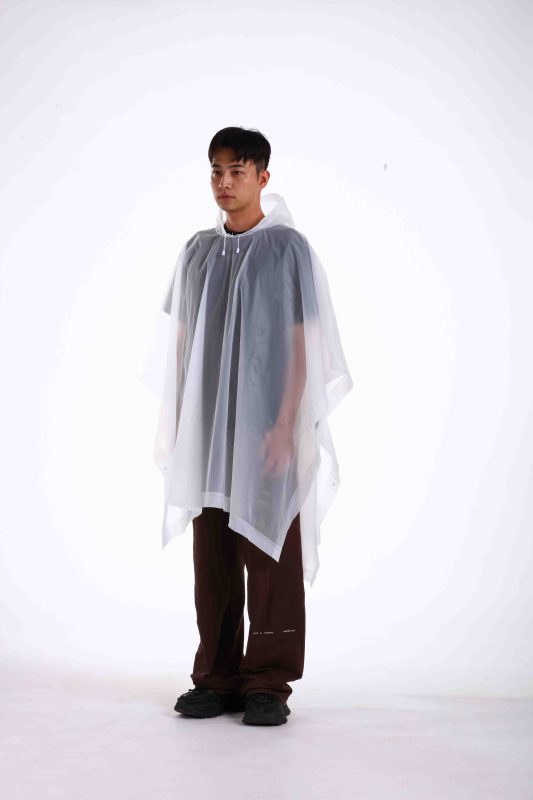
Often marketed as a replacement for PVC in the transparent or matte raincoat segments, EVA is odorless, non-toxic, and flexible.
-
Waterproofing: Fully waterproof.
-
Practicality: Softer and more pliable than PVC, but generally less durable for heavy industrial use.
-
Customization: Requires low-temperature printing processes to avoid melting the material.
Transition: While the base premium raincoat material defines the foundation, the real secret to performance lies in the construction, specifically the composite layers.
Q2: Why Choose Composite Premium Raincoat Material?
If you search for high-end industrial raincoats or premium fishing gear, you will frequently encounter composite fabrics. This is where material science gets exciting, creating a superior premium raincoat material.
Understanding Composite Premium Raincoat Material Benefits
Composite rainwear involves bonding a traditional fabric to a waterproof layer.
-
Enhanced Durability: By combining PVC with a polyester scrim, the premium raincoat material gains tensile strength. It becomes resistant to tearing, which is crucial for construction workers.
-
Improved Comfort: The inner fabric layer eliminates the sticky plastic feel of standard PVC, making it comfortable for long working hours.
-
Application: These materials are standard in composite PVC or PU rainwear used in fishing and premium industrial settings where flexibility and toughness are both required.
Q3: How Do Waterproof Ratings Define Premium Raincoat Material?
You cannot discuss the practicality of a premium raincoat material without understanding the numbers. A raincoat’s ability to keep you dry is measured by its Hydrostatic Head.
-
1,500 mm: Resists light rain. Suitable for basic promotional giveaways.
-
5,000 – 10,000 mm: Withstands moderate to heavy rain. This is the sweet spot for urban commuting and standard outdoor use, demonstrating solid premium raincoat material performance.
-
10,000+ mm: Designed for severe storms and prolonged exposure. High-end industrial gear and technical shells fall into this category, representing the pinnacle of premium raincoat material engineering.
Expert Tip: Always verify the seam sealing. You can have a 20,000mm fabric, but if the stitches aren’t taped, water will leak through the needle holes, negating the benefits of your chosen premium raincoat material.
Q4: How to Customize Your Premium Raincoat Material?
This is the most critical section for brand owners. Customization is not just slapping a logo on a stock coat. True OEM or ODM services allow you to control the DNA of the garment, starting with the premium raincoat material.
Fabric Selection for Premium Raincoat Material
You are not limited to the factory’s standard catalog.
-
Base Fabric Selection: You can choose from Oxford fabric, Nylon, or Polyester. The choice of premium raincoat material dictates the product’s end use.
-
PVC Thickness: The thickness, measured in silk, dictates the coat’s lifespan.
-
6-10 silk: Disposable, promotional use.
-
12-15 silk: Standard reusable, balanced for cost and durability.
-
18-25 silk: Heavy-duty industrial use.
-
-
Color Matching: Beyond standard colors, you can specify Pantone colors for brand consistency.
Logo Techniques for Premium Raincoat Material
The method you choose must match the premium raincoat material and the desired aesthetic.
| Technique | Best For | Durability | Visual Effect |
|---|---|---|---|
| Screen Printing | PVC, Polyester | High | Vibrant, solid colors |
| Heat Transfer | EVA, Nylon | Medium | High precision, multi-color |
| PVC Rubber Patch | PVC Rainwear | Very High | 3D texture, premium 3D look |
| Digital Printing | Polyester, Coated fabrics | Medium | No color limits, photographic detail |
Structural Options for Premium Raincoat Material
This is where you design the user experience.
-
The Silhouette: Choose from Poncho, Jacket style, or Two-piece.
-
Closures: Decide between zippers, snap buttons, or drawstrings.
-
Hardware: The choice of zippers and buckles can make or break the premium feel. You can even get custom logo-molded zipper pulls.
-
Visibility: Integration of reflective piping is a safety feature for nighttime workers.
Q5: Nylon vs. Polyester: Which Premium Raincoat Material Wins?
This is a classic dilemma when selecting a premium raincoat material. A 2022 field study offers a clear distinction.
When to Choose Nylon as Your Premium Raincoat Material
-
Mobility is key: It is lighter and more packable.
-
You are active: When combined with breathable membranes, nylon allows sweat vapor to escape. In the study, nylon jackets scored higher in comfort during physical exertion.
When to Choose Polyester as Your Premium Raincoat Material
-
Longevity is the goal: Polyester holds up better against UV rays and retains its Durable Water Repellent coating longer.
-
Budget is a concern: It is generally more cost-effective.
-
Sustainability matters: It is readily available in recycled formats, making it a forward-thinking premium raincoat material.
Q6: Is Sustainable Premium Raincoat Material Available?
The foreign trade market is shifting. Buyers are increasingly demanding green credentials from their premium raincoat material suppliers.
-
Materials: Look for recycled polyester. It offers the same durability as virgin polyester but with a lower carbon footprint.
-
Coatings: Specify PFC-free DWR. Traditional DWR coatings contain chemicals that are harmful to the environment.
-
Certifications: Factories can source materials that comply with OEKO-TEX Standard 100 or REACH regulations, ensuring your premium raincoat material is free from harmful substances.
Frequently Asked Questions
Can I print a large complex logo on any Premium Raincoat Material?
Yes. Professional manufacturers support large-format printing. Some factories have the capability to print logos as wide as 30 cm, using techniques like heat transfer or direct printing to ensure the design adheres properly without cracking, regardless of the premium raincoat material.
Which Premium Raincoat Material is best for a packable travel raincoat?
Nylon is the industry standard for packability. Its high strength-to-weight ratio allows it to be stuffed into its own pocket without taking up much space or weight, making it the ideal premium raincoat material for travelers.
How do I maintain my custom Premium Raincoat Material?
Over time, the DWR coating wears off. To restore it, wash the coat with a technical cleaner and then apply a spray-on DWR revitalizer. For PVC coats, simply wipe clean with mild soap and water; store hanging to prevent creases.
Related Articles
-
Comparing PVC vs. Nylon Rainwear Fabrics
-
Understanding Waterproof Ratings for Workwear
-
The Complete Guide to Custom Logo Printing
-
Eco-Friendly Materials: The Future of Rainwear
Conclusion
Selecting the right raincoat is a strategic decision. Whether you are kitting out a workforce or launching a private-label fashion line, the choices you make—from the base polymer to the customization technique—define the product’s success.
By understanding the science of waterproof ratings and the art of logo placement, you can ensure that your rainwear is not only a barrier against the storm but also a powerful vehicle for your brand identity. Mastering the nuances of premium raincoat material is the first step toward dominating your market segment.

 Canopy Tent Flags